
Plan your London airport and UK seaport transfers with practical tips on minicabs, taxis, timing, luggage, terminals and booking for a smooth journey.
Travelling through London for the first time can be exciting, but getting from an airport to a hotel, railway station or UK seaport can quickly become confusing. Several major airports serve London, while popular cruise and ferry ports are spread across southern and eastern England. Choosing the right transfer at the right time can make the difference between a relaxed journey and a stressful start to your trip.
Whether you are arriving at Heathrow, Gatwick, Stansted or Luton and continuing to Portsmouth or Southampton, or travelling between an airport and a cruise terminal, it's worth planning your ground transport. London airport transfers are available by train, coach, taxi, minicab and private transfer, with the right option depending on your destination, luggage, group size and schedule.
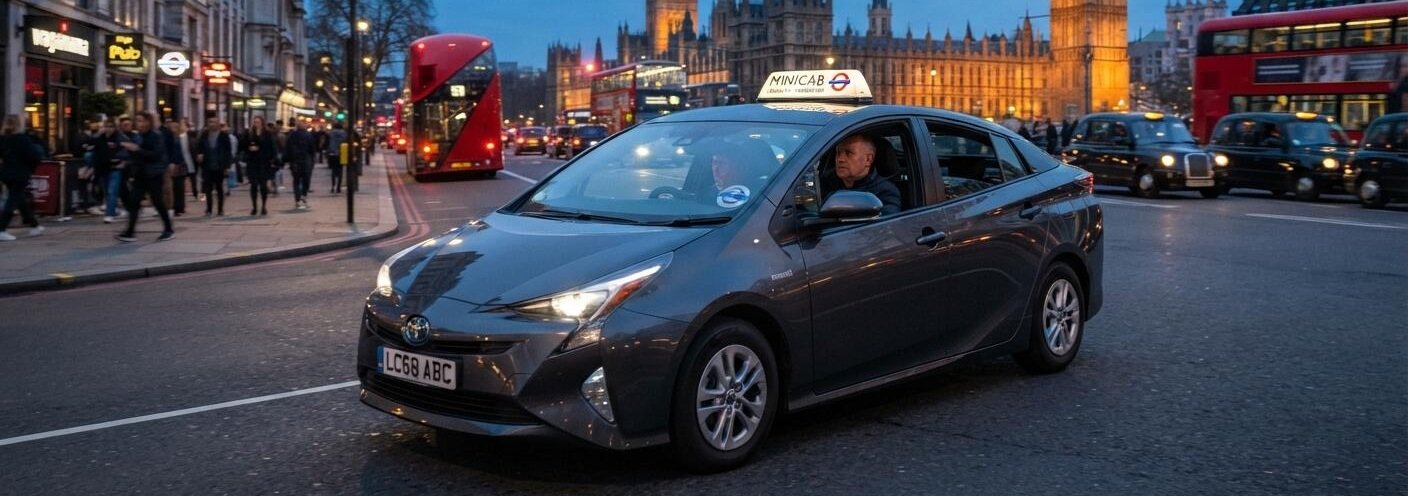
For first-time visitors, a pre-booked private airport or port transfer can be a practical option when travelling with luggage, children, several passengers or a fixed cruise departure time.
Public transport can be useful for travellers heading into central London, particularly when travelling light. However, airport-to-port journeys often involve multiple connections. A private minicab can provide a direct journey from the airport arrivals area to the hotel, cruise terminal or seaport.
Popular routes include:
Heathrow Airport to Southampton Cruise Port
Heathrow Airport to Portsmouth
Gatwick Airport to Southampton
Gatwick Airport to Portsmouth
Luton Airport to London hotels or onward destinations
Stansted Airport to central London
London hotels to Southampton Cruise Port
London hotels to Portsmouth Port
London airports to Dover Cruise Port
London airports to Tilbury Docks
The most suitable option depends on your flight arrival time, port check-in deadline, luggage and final destination.
London has several airports serving different parts of the city and surrounding regions. They are not all equally convenient for every destination.
Heathrow Airport (LHR) is London's major international gateway and is located west of the capital. It is particularly important for long-haul travellers and international connections.
The airport has five terminals, so first-time passengers should check their terminal carefully before arranging a pickup.
If you are travelling from Heathrow to a London hotel, railway station or cruise port, a pre-booked Heathrow airport taxi can provide direct door-to-door transportation.
For airport transfers London travellers can also use the Elizabeth line, Heathrow Express, London Underground, coaches and taxis. The best option depends on where you are staying and how much luggage you have.
Gatwick Airport (LGW) is south of London and is another major gateway for international and European travellers.
Gatwick has North and South terminals. The two terminals are connected by a free automated transit service, but passengers should still confirm the correct terminal when booking transportation.
Gatwick has rail connections towards London, including services to central London. However, passengers heading directly to a cruise port may find a pre-booked private transfer easier because they can avoid changing between different transport services with luggage.
For travellers who need an airport taxi London Gatwick service, pre-booking also gives you a clear pickup arrangement before your flight.
For a broader comparison of the major airports, see the guide to London Gatwick vs Heathrow and other London Airports.
Stansted Airport (STN) is northeast of London and is widely used for European and short-haul flights.
The Stansted Express provides a rail connection to Liverpool Street, while coaches and private transfers provide alternatives.
If your final destination is central London, public transport can be straightforward. However, travelling with a family, large luggage or a tight onward connection may make a pre-booked minicab more convenient.
London Luton Airport (LTN) is north of London and serves many European and leisure routes.
Travellers can connect with central London using rail and coach services. The journey normally involves the shuttle connection between the airport terminal and Luton Airport Parkway station when travelling by rail.
For passengers who prefer a direct journey from their accommodation to the terminal, a London Luton Airport taxi service can remove the need to manage luggage across several connections.
This can be particularly useful for families, elderly passengers and groups travelling with multiple suitcases.
London City Airport (LCY) is much closer to central London than the other major airports. It is particularly convenient for business travellers and passengers staying in eastern or central London.
Its location means a taxi or minicab can be particularly useful for passengers travelling to areas such as Canary Wharf, the City of London, Stratford and Docklands.
One of the biggest mistakes first-time visitors make is focusing only on the airport.
Your flight may arrive in London, but your actual destination could be hundreds of miles away from the airport.
For example, a traveller arriving at Heathrow for a Southampton cruise does not necessarily need to travel into central London first.
Similarly, someone arriving at Gatwick for a cruise departing from Portsmouth may be better served by travelling directly from Gatwick to Portsmouth rather than entering London and travelling back south.
This is why airport-to-port transfers should be planned around the complete journey rather than just the first leg.
Several UK ports are popular with cruise passengers and international travellers.
Southampton is one of the UK's best-known cruise destinations and is located on the south coast of England.
Passengers arriving at a London airport may need to travel directly to Southampton rather than spending the night in central London.
A private Southampton transfer can be particularly useful when:
Your cruise departure is early
You have several suitcases
You are travelling with children
You have an onward flight after your cruise
You want to avoid multiple train changes
You are unfamiliar with UK public transport
Always allow sufficient time between your flight arrival and cruise check-in. Flight delays, immigration, baggage collection and road traffic can all affect the journey.
Portsmouth is another important UK port and is located on the south coast.
It is used for ferry and cruise travel and can be reached from London and the surrounding airports.
Travellers arriving at Heathrow or Gatwick may prefer a direct transfer to Portsmouth rather than travelling into central London first.
For passengers specifically travelling to Portsmouth, the Portsmouth transfer service can be considered when arranging airport, hotel or London-to-port transportation.
Dover is located in Kent and is one of the UK's important ferry and cruise gateways.
Travelling to Dover from a London airport can require careful planning because the route involves leaving London and travelling towards the southeast coast.
A direct private transfer can be useful when the passenger has heavy luggage or a strict cruise or ferry check-in time.
Tilbury is located east of London on the River Thames and is another important maritime destination.
Its location makes it relatively convenient for travellers staying in eastern London, but airport passengers should still plan their route according to their arrival airport and terminal.
Harwich is located in Essex and serves ferry and cruise traffic. It is particularly relevant for travellers arriving through eastern England or London Stansted.
Because Harwich is outside central London, passengers should consider the complete journey time rather than simply calculating the distance from the airport.
Airport-to-port transfers require more planning than a normal airport-to-hotel journey.
If you arrive at an airport at 8:00 am, you cannot assume that you will be ready to leave at 8:15 am.
You may need time for:
Immigration and passport control
Baggage collection
Customs
Finding the arrivals area
Meeting your driver
Loading luggage
Travelling through traffic
Arriving at the port
Completing cruise or ferry check-in
This is particularly important for international travellers who are unfamiliar with UK airports.
Heathrow itself advises passengers travelling between airports to allow additional time for passport control, baggage, check-in, security and potential traffic or service delays.
For a normal airport journey, booking ahead gives you time to check the pickup location, vehicle size and fare.
For a cruise or ferry journey, planning becomes even more important.
Consider booking as soon as your flight and port itinerary are confirmed, especially during:
School holidays
Christmas and New Year
Summer holidays
Bank holidays
Major London events
Busy cruise periods
Last-minute transportation can sometimes be arranged, but advance booking gives you more opportunity to choose the appropriate vehicle and schedule.
There is no single transport option that works for every traveller.
Trains can be convenient for passengers travelling from an airport into central London.
For example, Heathrow, Gatwick and Stansted have dedicated rail services towards London, while Heathrow and London City Airport are connected to the London Underground network.
However, trains can become less convenient when travelling with several large suitcases or when your destination is a cruise port outside London.
Airport coaches can be an economical option, particularly for travellers who are not in a hurry.
The disadvantage is that coaches can take longer and may not provide a direct journey to your final destination.
London black cabs are widely recognised and can be useful for journeys within London.
For longer airport-to-port journeys, however, travellers may want to compare the price and booking arrangements with a pre-booked private transfer.
A pre-booked minicab can provide door-to-door transportation without requiring passengers to change trains or carry luggage between different platforms.
This can be particularly useful for families, groups and cruise passengers.
When booking an airport or port transfer, provide accurate travel information.
You should normally have the following details ready:
Flight number
Arrival airport
Terminal
Arrival date
Expected arrival time
Number of passengers
Number of suitcases
Child or infant seat requirements
Hotel or accommodation address
Cruise terminal or port
Ferry departure time, where applicable
Return journey details
Providing the flight number is particularly useful for airport pickups because the operator can monitor the flight and account for changes to the expected landing time.
Families should think about vehicle size before booking.
A standard saloon may be suitable for a small group with limited luggage. Families travelling with pushchairs, large suitcases and hand luggage may need an estate car, MPV or larger passenger vehicle.
Larger groups should consider booking a suitable 6, 7, 8 or 9-seater vehicle rather than assuming several standard cars will be available at the airport.
If you need a child seat, request it when making the booking rather than waiting until you arrive.
Flight delays are one of the main reasons airport transfers need careful coordination.
If your transfer is connected to a flight number, the operator may be able to monitor the flight and adjust the pickup accordingly.
This is particularly useful for international flights where delays can occur before landing.
However, passengers should always check the specific waiting-time and flight-monitoring policy of their transfer provider before booking.
A low-cost flight does not always mean a low-cost trip.
If the airport is far from your hotel or cruise port, the additional transfer can increase both cost and travel time.
Heathrow, Gatwick, Stansted and Luton are in different parts of the region.
Always check the airport code on your flight confirmation before booking your transfer.
Airports such as Heathrow and Gatwick have multiple terminals.
The terminal can affect where your driver meets you.
A cruise ship will not necessarily wait for a delayed passenger.
Build a sensible buffer between your flight arrival and port check-in.
Four passengers with four large suitcases may need more luggage space than a standard car provides.
Choose the vehicle based on both passenger numbers and luggage.
If you are going from an airport to a port outside London, check whether a direct transfer is possible before travelling into central London.
A simple way to plan your trip is to start with the airport and then identify your final destination.
Heathrow: Central London, Southampton, Portsmouth, Dover and other southern destinations.
Gatwick: Central London, Brighton, Southampton, Portsmouth and destinations across southern England.
Stansted: Central London, Essex, Cambridge and eastern destinations.
Luton: Central London, Bedfordshire and destinations across northern London and the Midlands.
London City: Central London, Canary Wharf, Docklands and eastern London.
This approach can help first-time visitors avoid unnecessary connections.
Minicab Lane provides pre-booked airport taxi and minicab transfers across London's major airports, including Heathrow, Gatwick, Stansted, Luton, London City and Southend.
The service also covers several UK seaports, including Portsmouth, Southampton, Dover, Harwich and Tilbury Docks.
According to Minicab Lane's service information, airport journeys can include fixed fares, flight monitoring, meet-and-greet arrangements and up to 60 minutes of free waiting time for arrivals. Vehicle options range from saloon cars to larger passenger vans.
For travellers planning a complete airport-to-port journey, these options can make it possible to arrange the transfer before leaving home rather than searching for transportation after landing.
A pre-booked private transfer can be convenient because it provides a direct journey from the airport to the cruise port without requiring passengers to change trains or coaches.
Yes. Heathrow and Portsmouth are connected by road, and travellers can arrange direct private transportation rather than travelling into central London first.
Yes. Gatwick Airport is south of London, and Portsmouth is further south on the coast. A pre-booked airport-to-port transfer can provide a direct journey.
Travellers can use public transport or arrange a private transfer. The most suitable option depends on the airport, arrival time, luggage, group size and cruise departure schedule.
London City Airport is the closest of the major London airports to central London. Heathrow is also well connected to central London through rail and Underground services.
Booking can be useful for first-time visitors, families, large groups, and passengers with a fixed onward schedule such as a cruise or ferry departure.
Yes. Larger passenger vehicles can be booked for families and groups with additional luggage. Always provide accurate passenger and luggage numbers when booking.
You should normally provide your airport, terminal, flight number, date, arrival time, passenger numbers, luggage requirements and final destination.
Before travelling, check:
Your airport code
Your airport terminal
Your flight number
Your arrival time
Your final destination
Your cruise or ferry departure time
Number of passengers
Number of suitcases
Child-seat requirements
Transfer pickup instructions
Driver contact information
Traffic and potential delays
Your required arrival time at the port
Planning these details before your trip can make your first journey through London's airports and the UK's seaports considerably easier.
Minicab Lane LTD is a London-based minicab booking platform connecting passengers with professional private hire operators for airport, hotel, station and seaport transfers. Services cover major London airports and destinations including Portsmouth and other UK ports.
For airport taxi London bookings, airport-to-port journeys or other pre-booked minicab services, contact Minicab Lane LTD on +44 7768 718332.
Address: 5A Stork Rd, London E7 9HR, United Kingdom
©2026 Minicab Lane | Developed by Fugenservices




 Secured by
PositiveSSL
Secured by
PositiveSSL